
Bridging the Gap: How to Plan and Produce a Successful Hybrid Event in 2026

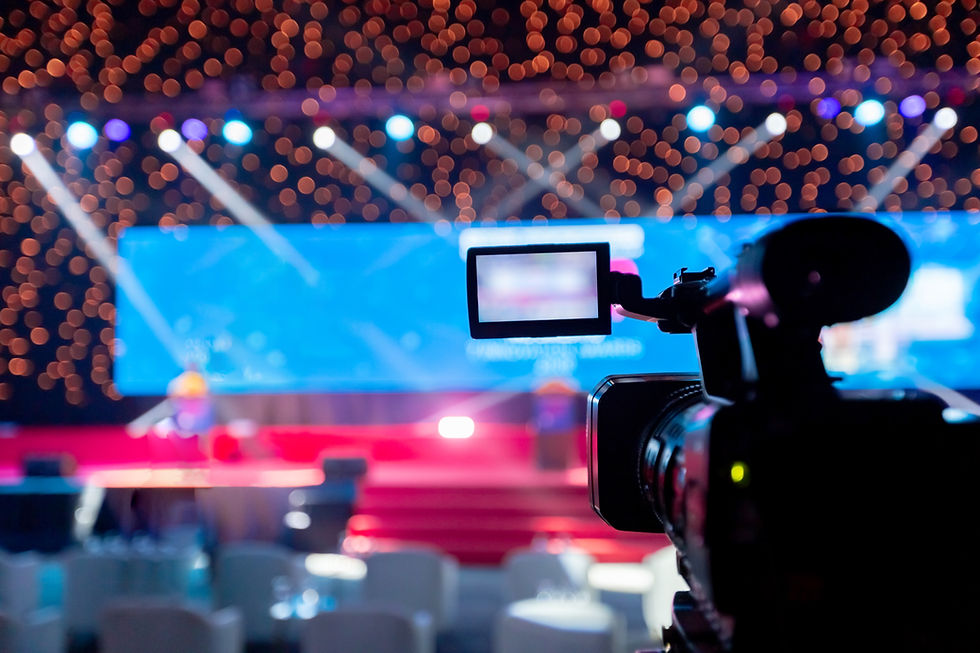
Hybrid events aren’t new — but the expectations around them have changed dramatically. Associations, in particular, now rely on hybrid conferences to reach more members, increase accessibility, and extend the life of their content. Yet despite the demand, many organizations still struggle with a critical — and often overlooked — challenge:
There is a major gap between hybrid event software solutions and the onsite production needed to make them successful.
Most hybrid event failures don’t happen because the platform is flawed. They happen because the onsite production, coordination, and quality control aren’t tightly integrated with the technology that powers the virtual experience. In this article, we’ll break down how associations can plan and produce a smooth, engaging, and high-quality hybrid event — by closing the gap between software and production.
1. Understand the Two Sides of Hybrid Events — and Why They Often Don’t Connect
A. The Software (virtual platform, streaming tools, engagement features)
These tools handle registration, live video, Q&A, polling, virtual booths, networking, on-demand content, and analytics.
B. The Onsite Production (AV, staging, cameras, audio, lighting, operator support)
This is the engine that drives what the virtual audience actually sees and hears.
The problem: These two worlds are often run by separate companies who rarely communicate directly. That disconnect leads to:
Poor audio levels or echo on the virtual feed
Bad camera angles / inconsistent lighting
Late session transitions
Missed cues between onsite and virtual teams
Speakers who aren’t properly briefed for hybrid delivery
Virtual attendees feeling like an afterthought
Hybrid success requires both teams working as one, but most associations don’t realize this until something goes wrong.
2. Choose Technology That Matches Your Onsite Production Needs
Many associations choose a platform first — then try to make production fit it. A better approach is the reverse:
Start with the production requirements, then determine which software will support your AV workflow.
Key questions to ask:
Will your sessions be multi-camera or single camera?
Will you need remote speakers integrated into in-room panels?
How many concurrent rooms will need streaming?
Does the platform handle mixed formats (live + pre-recorded + simulive)?
Can the software integrate with your AV switching setup?
When software and production are chosen together, the virtual audience receives the same professional experience as those in the room.
3. Bring Your AV Team Into Planning Early — Not Two Weeks Before
This is one of the biggest mistakes associations make. Onsite production teams should be involved as early as your platform provider. Why? Because hybrid production requires:
Pre-event technical testing
Virtual + physical run-of-show
Speaker training
Redundancy planning
Cueing for both audiences
Internet reliability analysis
Camera layout tied to session design
When the AV team is treated as a last-minute vendor, quality control suffers. When they’re integrated early, they help shape the event design for both audiences.
4. Assign a Single Point of Coordination Between AV, Platform, and Event Team
Hybrid events can involve:
A platform provider
A livestream operator
Onsite AV crews
A virtual producer
An event planner
Remote speakers
In-person speakers
Moderators / emcees
Without one person overseeing all moving parts, communication breaks down.
You need:
One hybrid event producer who owns both sides and ensures nothing slips through the cracks.
This role manages:✔ smooth transitions✔ unified run-of-show✔ speaker readiness✔ real-time troubleshooting✔ cueing for both in-person + virtual✔ monitoring audio/video quality
This single position can make or break the virtual attendee experience.
5. Build a Run-of-Show Designed for Hybrid — Not Just In-Person Streaming
Traditional conference schedules aren’t built for hybrid audiences.
Hybrid-friendly run-of-show includes:
Buffer time between sessions (for transitions + checks)
Shorter sessions (virtual attention spans are different)
Dedicated engagement moments for both audiences
Clear handoffs between in-person and virtual speakers
Segmenting content for on-demand replay
A hybrid event needs a hybrid script — not a copy-paste of an in-person program.
6. Don’t Treat Virtual Attendees as Secondary
Many hybrid events unintentionally send the message: "Thanks for joining… from wherever you are.” Not good enough. Ways to elevate the virtual audience:
Dedicated virtual host/emcee
Real-time Q&A moderation
Virtual-only networking
Virtual sponsor experiences
Chat engagement that doesn’t disrupt in-room attendees
On-demand library with quick delivery
People stay engaged when they feel included.
7. Embrace Quality Control as a Core Part of Hybrid Production
Hybrid requires continuous testing, monitoring, and backup plans, including:
Secondary internet (bonded or cellular backup)
Redundant audio feeds
Dual-stream encoding
Dedicated QC monitor watching the virtual feed
Real-time tech support chat for remote users
Onsite and virtual QC teams keep audiences connected and confident.
Conclusion: The Future of Hybrid Belongs to Teams That Bridge the Gap
Hybrid events aren’t going away — and associations are uniquely positioned to benefit from them. The organizations that succeed will be the ones who understand:
Software can’t replace production. Production can’t replace software. Hybrid works only when both teams operate as one.
Associations that close this gap deliver professional, polished experiences that:
increase member satisfaction
enhance engagement
improve accessibility
maximize ROI
extend the life of their content
And that’s where hybrid truly becomes powerful.
Associa specializes in producing hybrid events. If you are interested to learn more, please reach out to us for an initial consul at rich@assocaevents.com.

Comments